Uncertainty isn’t an easy thing for humans to handle in our lives. We are literal creatures of habit, and we love knowing how to deal with situations, responses, reactions – it’s why we like learning through repetition. But repetition is also technically a form of insanity – repeating the same thing over and over but expecting something different to happen is a common pop culture definition of madness. So why do we love patterns and predictability so much?
For one, it’s safe. When we know what to expect, how to handle it, how to shrug it off and carry on with our day, no matter how exhausting or tiring it is, we find a way to just carry it on. Your job might be awful, you might hate everyone there, but you know it’s awful and you know you hate these people, so why change? What if you went somewhere else and it was even more awful and the people were actually some kind of terrible humans that kick puppies and put the milk in first with the teabag?!
When we know what to expect, it gives us a sense of security. It’s why some people find it so hard to leave jobs they hate, or relationships they know aren’t working anymore. It’s a huge, scary leap into the big black hole of the UNKNOWN. And sometimes it’s more comforting to sit right by the black hole, looking into it, going ‘nah, that’s alright thanks, at least here I know I won’t suffer from spaghettification.’
Sometimes though, we are forced into uncertainty and made to take risks – because life likes to throw us a curveball. Earlier this year I experienced this, having handed in my resignation at my place of work intending to start somewhere new, only for that position to be pulled due to COVID-19. Without a job and the UK locked down, I decided to freelance. It was a good decision! But it was also a risk I had to take, in the sense that without trying my hand at this, I would have just sat on my sofa applying for jobs I would never hear back from and sew terrible wonky cross stitches. By being forced to take my fate into my own hands and find my own work, run my own business, and be proactive in my writing, marketing, and website, I stepped up my game – I embraced all the uncertainty and risk that goes with being freelance, and so far, it’s been an excellent career move.
Generally I’m quite go with the flow when it comes to change. Shit happens, and you have to get on with it. I remember when my first boyfriend broke up with me, I was on the train back sobbing my eyes out, but as soon as I got home I told myself the worst had happened, and it was time to focus on getting over it. I had my mum throw out his old clothes, I erased our chat history, and I deleted his number from my phone. I then lay down quietly eating a Twirl while crying and did that for the next 4 months.
My point is that I just got on with it. Yes it was hard and horrible and I cried and lost a lot of weight and was generally sad and awful to be around, but I acted to make the situation work for me. It made me much stronger as a person and I pushed myself way out of my comfort zone, throwing myself into my part time modelling (as you can see below), running, and my studies.
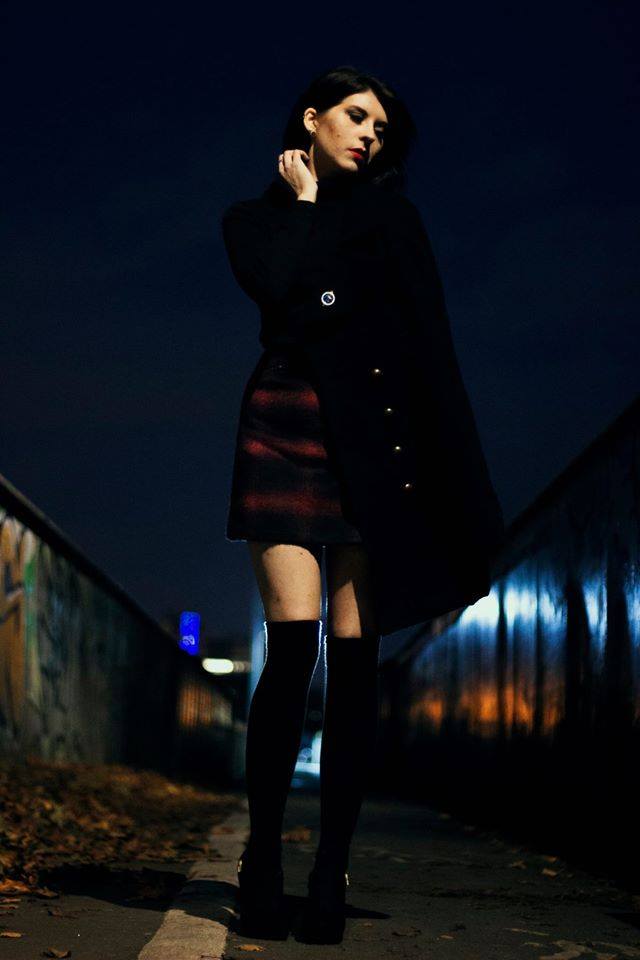
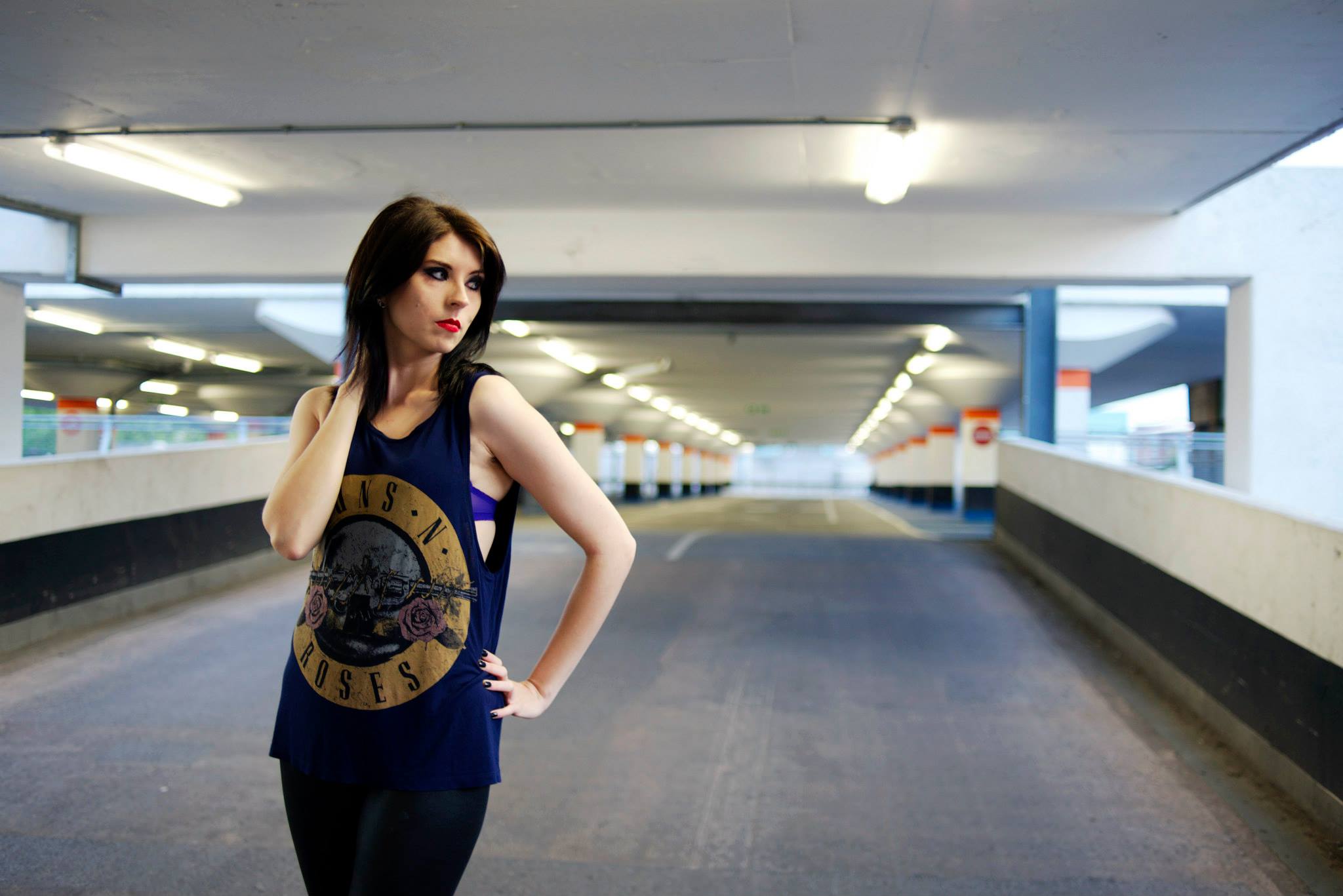
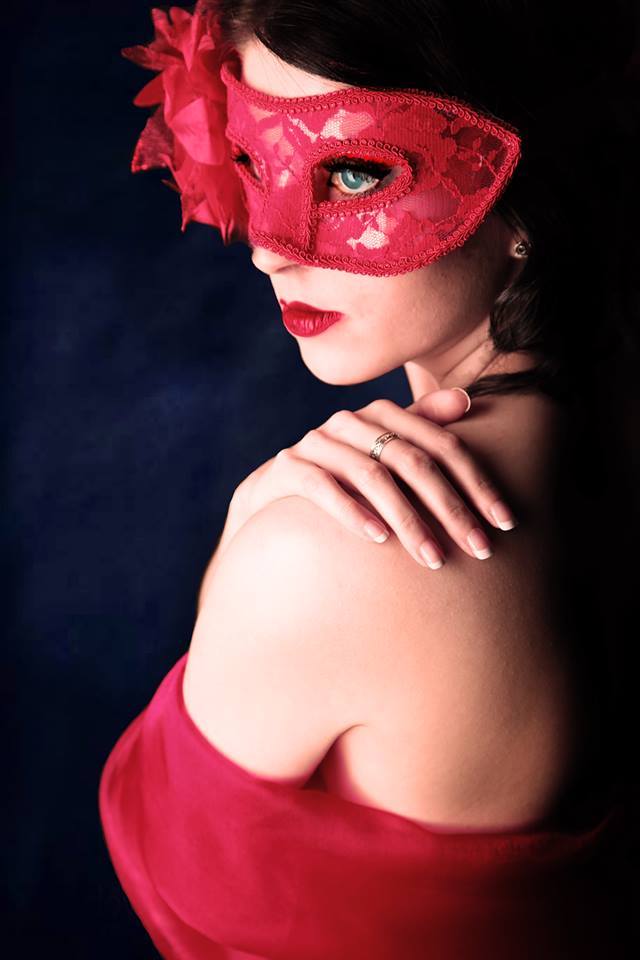
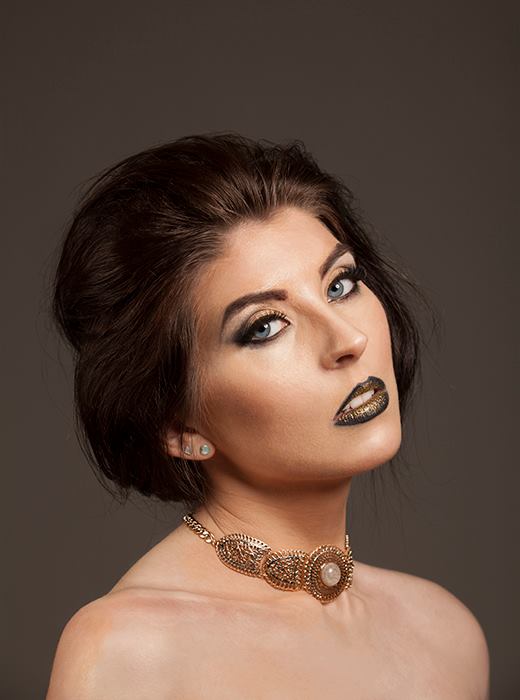
Image credits in order: Adam Teighe, Kat Ullman, Kerrie Caine, Aaron Sehmar
I suppose in that sense I don’t like uncertainty and act as quickly as possible to establish a routine and get myself back in control of whatever variable it is that’s changed. But equally, as a keen horse rider, I take a massive risk every time I get into the saddle. And if there’s one sport where you need to be prepared for uncertainty, it’s equestrian sports.
I’ve ridden for over 20 years and can’t imagine it not being in my life – it’s my ultimate freedom and gives me a huge rush of joy. Riders are incredibly resilient and tough – we have a tendency to totally brush off injury and/or recover from things which are horrifically painful, only to get back on board our steeds as soon as medically allowed (and often before). I’ve met plenty of riders casually talk about when they were crushed during a fall, or thrown onto the road, or fell head first into a jump. We aren’t dramatists in the riding community and tend to downplay our injuries. When I broke my collarbone at 16, I got back in the saddle after 9 weeks. Breaking my pelvis last year, I got back on after 7 weeks and rode properly again from 10 weeks.
This type of risk taking and embracing of uncertainty can be very difficult for people not involved with horses to understand. And I totally get why. I am trusting an animal much larger and heavier than me, with a brain programmed for flight, to carry me around at speed, and often over fences – all while my only means of control is a bit of metal in it’s mouth and my legs. I’ve had horses buck, kick, rear, spin, spook, bite – but every time I get back on and handle it. What makes me take that risk over and over, knowing that I can never be totally certain about what might happen? Why do I keep getting back on and hurting myself (my long suffering partner is desperate to know).
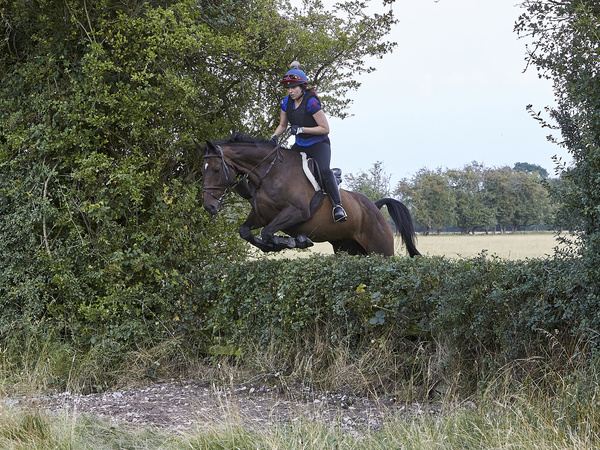
This why I ride – to enjoy amazing moments like clearing this hedge in the summer.
Truthfully, I know that getting into that saddle is a risk – but part of me doesn’t really care that much about it. The joy of riding and the time I spend with horses so vastly outweighs the bumps and falls I’ve experienced that it makes it worth it. If I spent every ride worrying about what could happen I would never enjoy it – and likely end up carrying out some self-fulfilling prophecy as a result.
I refuse to let my life be controlled by the idea of ‘what if’ fear – I might as well never leave the house if I did that. I’ve learned to embrace uncertainity as a part of life, and honestly, knowing that you don’t have to be in control of everything at all times is quite a freeing mindset. I’m much more relaxed and even less anxious since I learned that some variables in life just can’t be controlled – you can only control how you respond and react, and if you can manage that, you can handle it.
If 2020 has taught me anything, it’s that you can’t let fear make you its bitch. Sometimes you have to take matters into your own hands, and make that jump into the unknown. More often than not, you’ll be surprised at what was lying on the other side of that black hole, and you’ll find you can make more of yourself than you realise.
 H.J.Albone Media